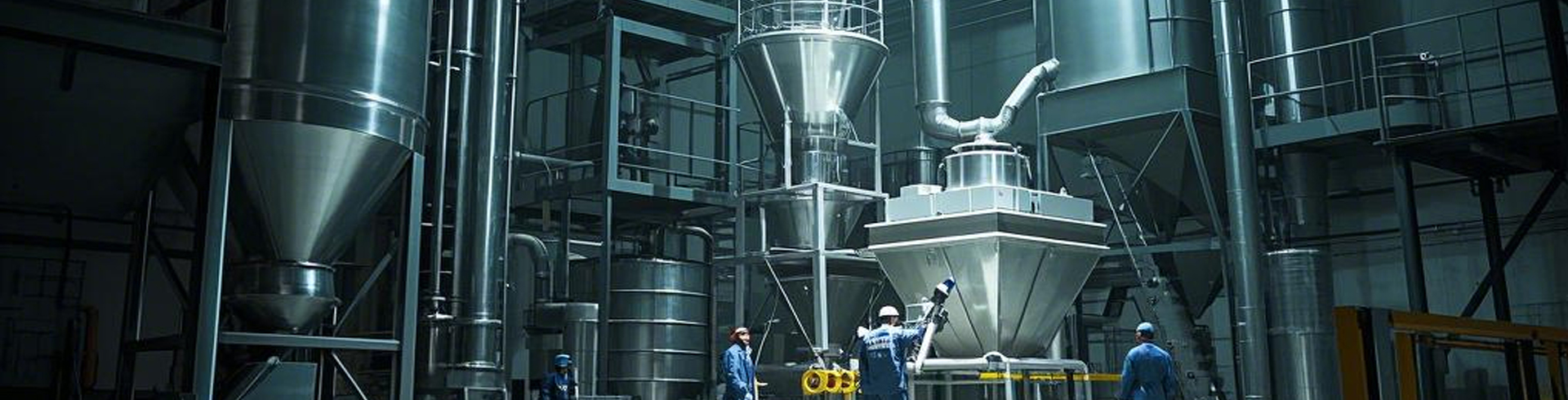
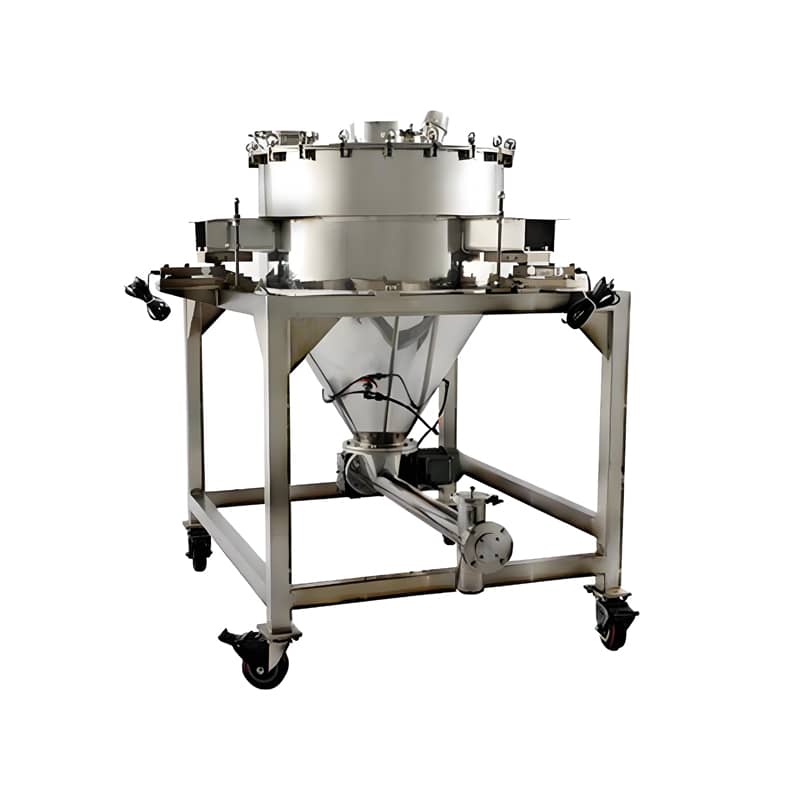
Products Description
Need continuous, high-precision dosing of powders or granules — regardless of density changes?
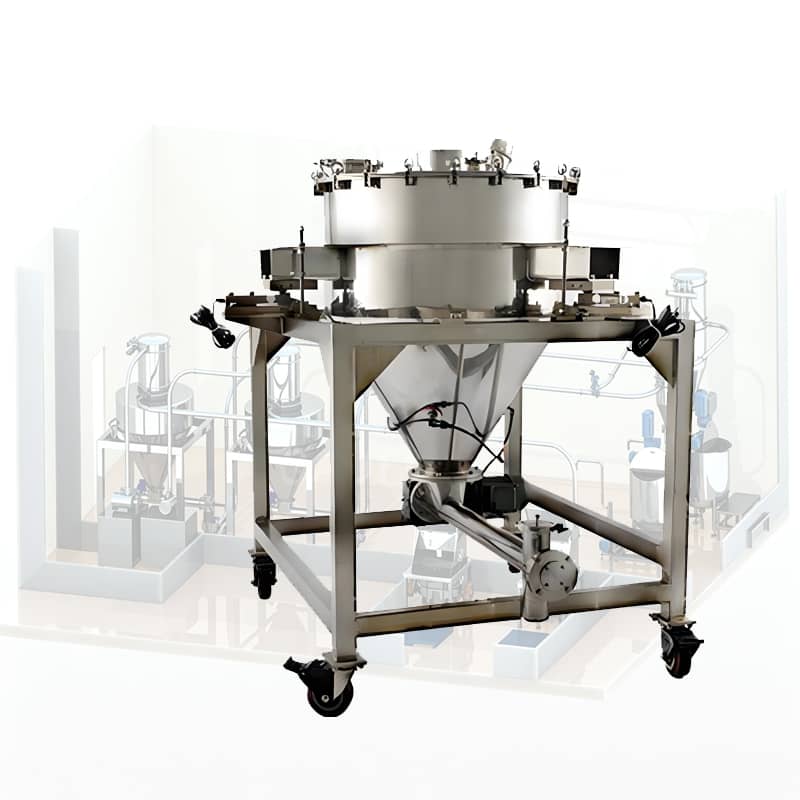
Guanjiang's Loss-in-Weight Feeding System (Gravimetric Feeder) delivers ±0.1% to ±0.5% dosing accuracy by measuring actual weight loss in real time. Unlike volumetric feeders, accuracy is unaffected by material density, flowability, or particle size changes. With closed-loop PLC control, seamless refill cycles, and GMP-compliant stainless steel construction, it's the strategic investment for plastics, food, chemical, pharmaceutical, and battery industries where recipe consistency and raw material cost control are critical.
Key Features of Loss-in-Weight Feeding System
Direct weight measurement unaffected by density changes, flowability, or particle size. Closed-loop control continuously corrects errors for long-term stability.
System briefly interrupts precise feeding to rapidly refill the hopper when weight drops below preset limit — then resumes control. No interruption in continuous production.
Ideal for materials prone to bridging, rat-holing, poor flowability, or adhesion — overall weight measurement compensates for these factors.
Modular design for quick disassembly. SS304/316L stainless steel with mirror-polished surfaces meets GMP/FDA requirements — supports CIP cleaning.
Integrates with plant DCS or PLC for remote monitoring, data logging, and automated production — lays groundwork for smart factories.
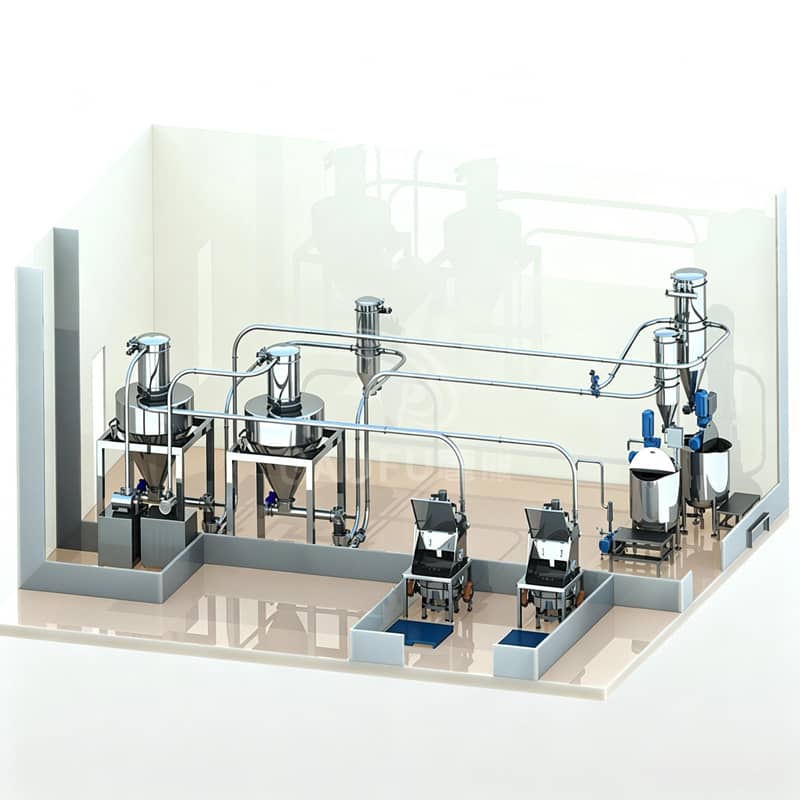
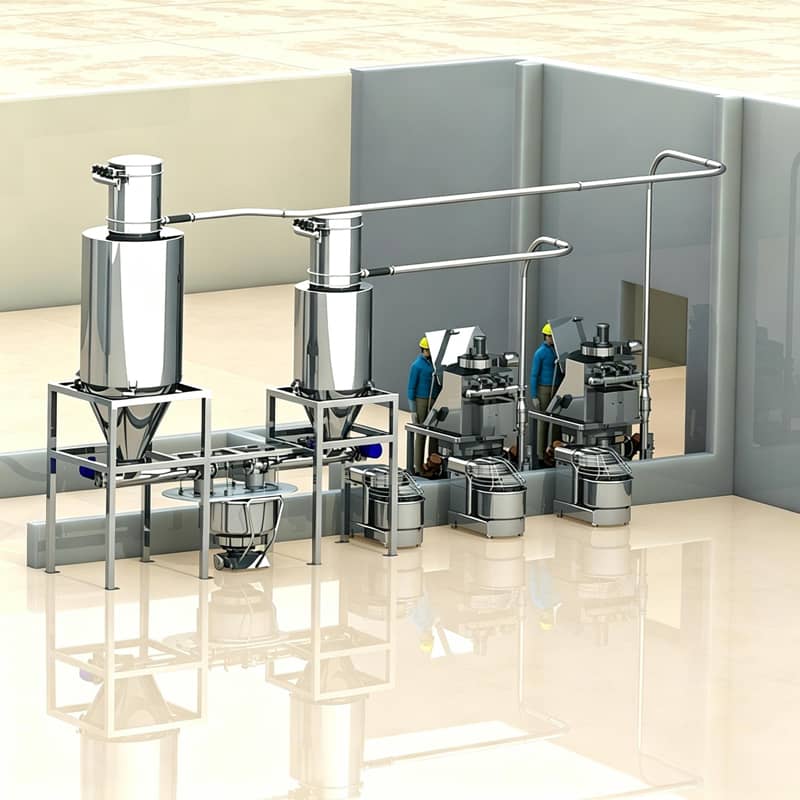
Single system can be configured with multiple discharge outlets for precise proportioning of different materials.
High precision prevents overfeeding of expensive raw materials. Reduces manual intervention and downtime — increases OEE.
Technical Specifications (ZKS Series)
| Model | Motor Power | Capacity (kg/h) | Suction Port | Dimensions (mm) |
|---|---|---|---|---|
| ZKS-1 | 1.5 KW | 400 | Φ38 mm | Φ290 × 802 |
| ZKS-3 | 3.0 KW | 1200 | Φ51 mm | Φ290 × 952 |
| ZKS-7 | 7.5 KW | 6000 | Φ63 mm | Φ420 × 1379 |
| ZKS-20-5 | 11.0 KW | 5000 | Φ102 mm | Φ800 × 2070 |
? Additional Specifications:
Dosing Accuracy: ±0.1% ~ ±0.5% (material dependent)
Working Pressure: 0.4-0.6 MPa (compressed air)
Gas Consumption (all models): 500 NL/min
Material of Construction: SS304 / SS316L (mirror-polished, GMP grade)
Control System: PLC with HMI (Siemens/Mitsubishi)
Discharge Mechanism: Screw feeder / Vibratory tray / Belt feeder (customizable)
Custom sizes and higher capacities available upon request.
Application Industries
| Industry | Typical Applications |
|---|---|
| Plastics Industry | Color masterbatch, additives, recycled/virgin material ratio |
| Food Industry | Flour, sugar, salt, spices, ingredients |
| Chemical Industry | Continuous mixing, reactive feeding of chemicals, powders, granules |
| Building Materials | Cement, sand, additives batching |
| Pharmaceutical Industry | APIs, excipients precision blending |
| Battery Industry | Cathode/anode powders, conductive agents |
Core Working Principle
The system performs real-time, continuous weighing monitoring of the entire feed hopper (including material) and discharge device (screw feeder, vibratory tray, etc.).
Basic Operating Cycle:
1. Stable Feeding Phase: Controller calculates actual discharge rate by measuring total system weight decrease over time. Actual rate is continuously compared to preset target — speed of discharge device is automatically adjusted to correct any deviation.
2. Refill Phase: When material weight drops below preset lower limit, system briefly interrupts precise feeding to activate rapid refill device (butterfly valve, gate valve) — then resumes loss-in-weight control mode. No interruption in continuous production.
Frequently Asked Questions
Q1: How does loss-in-weight differ from volumetric feeding?
A: Loss-in-weight (LIW) measures actual weight loss — accuracy is unaffected by density changes, flowability, or particle size variations (typically ±0.1-0.5%). Volumetric feeding assumes constant density — accuracy drops as material properties change. LIW is preferred for high-value ingredients and precise formulations.
Q2: What happens during the refill cycle? Does feeding stop?
A: Feeding briefly interrupts precise control during refill (typically 5-15 seconds). However, the system can be configured with a dual-hopper design or use a pre-refill weight value to maintain near-continuous output. For most continuous processes, this brief interruption is acceptable. For absolute continuous feeding, we recommend a twin-feeder configuration.
Q3: Can the system handle multiple components simultaneously?
A: Yes. A single loss-in-weight system can be configured with multiple discharge outlets (screws or trays) for precise proportioning of different materials into one stream. Alternatively, multiple LIW feeders can be networked together under a central PLC for complex recipes with up to 12+ ingredients.
Q4: How do you clean the system between different products?
A: The modular design with quick-release clamps allows disassembly without tools. All surfaces are mirror-polished stainless steel (Ra<0.4μm) with rounded corners — no material adhesion. For automated cleaning, we offer an optional CIP (Clean-in-Place) system with spray balls. Fully GMP compliant for pharmaceutical and food applications.
Q5: What feeding mechanisms are available?
A: We offer screw feeders (most common for powders), vibratory trays (for free-flowing granules), belt feeders (for larger particles), and pump feeders (for liquids/pastes). Selection depends on material flowability, particle size, and required feed rate. Our engineers will recommend the optimal mechanism.
Need a high-precision loss-in-weight feeding system for your continuous production line?
Request a Quote → Download Datasheet (PDF)* Please provide your required feed rate (kg/h), material type, accuracy requirement, and industry application for a fast, accurate quotation.