Products Description
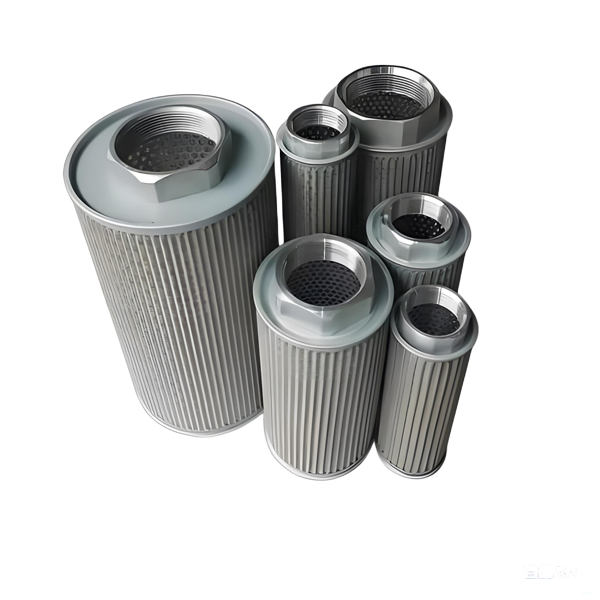
Need a high-pressure filter element that can withstand demanding industrial air system conditions? Guanjiang's High-Pressure Fan Filter Element is a specialized filtration component designed for industrial air systems operating under high-pressure conditions. These precision-engineered filters serve as critical protective barriers for high-pressure fans, blowers, and compressors — preventing particulate contamination while maintaining optimal airflow. Manufactured using reinforced composite materials, they feature multi-layer construction with graduated density filtration, withstanding operational pressures from 2 to 15 bar while maintaining structural integrity and filtration performance.
Key Advantages
Withstands continuous operation under high-pressure differentials. Reinforced internal structure prevents media collapse — maintains performance under pressure fluctuations.
Graduated density filtration design — high dust holding capacity with minimal pressure drop. Efficient removal of particulates down to micron level.
Resistant to moisture, oil mist, and chemical exposure. Robust construction withstands vibration and pulsation — long service life under demanding conditions.
Optimized airflow design reduces energy consumption. Extended service intervals lower operating costs — protects expensive fan and blower systems.
Consistent performance across temperature variations — suitable for diverse industrial environments.
Reliable protection for sensitive downstream equipment with minimal maintenance requirements.
Features strengthened pleats, reinforced end caps, and heavy-duty gaskets for structural integrity.
Technical Specifications
| Parameter | Specification |
|---|---|
| Operating Pressure RangeNon | 2 ~ 15 bar (customizable for higher pressures)Non |
| Filtration EfficiencyNon | ≥ 99.5% @ 1μm (multi-layer graduated density)Non |
| Media TypeNon | Reinforced composite / Synthetic fiber / Glass fiberNon |
| Temperature RangeNon | -20°C ~ 120°CNon |
| End Cap MaterialNon | Carbon steel / Stainless steel / Aluminum / PolyurethaneNon |
| Seal / Gasket MaterialNon | Nitrile / Silicone / Viton (for chemical resistance)Non |
| Maximum Flow RateNon | 100 ~ 5,000 m³/h (model dependent)Non |
| Initial Pressure DropNon | < 50 mbar (at rated flow)Non |
Customization Options:
Filter dimensions: Outer diameter / Inner diameter / Length — custom sizes available
Media treatment: Hydrophobic (moisture-resistant) / Oleophobic (oil-mist resistant) / Anti-static
End cap configurations: Open / Closed / Gasketed / Special hole patterns
Application-specific designs: High-temperature (up to 200°C) / Corrosive environment / Food-grade materials
Applications
| Industry | Typical Applications |
|---|---|
| Industrial ManufacturingNon | Process air systems, pneumatic conveying, blower protectionNon |
| Power GenerationNon | Combustion air filtration, turbine protection, boiler air supplyNon |
| Chemical ProcessingNon | Process gas filtration, reactor air supply, compressor protectionNon |
| Water TreatmentNon | Aeration systems, blower protection, air supply filtrationNon |
| Metallurgical IndustryNon | Furnace air supply, process ventilation, dust collection systemsNon |
Frequently Asked Questions
Q1: What makes high-pressure filter elements different from standard filters?
A: High-pressure filter elements feature reinforced internal structures, strengthened pleats, and heavy-duty end caps to prevent media collapse under pressure differentials (2-15 bar). Standard filters cannot withstand these pressures and would fail, allowing unfiltered air to bypass and damage downstream equipment.
Q2: How does graduated density filtration work?
A: The multi-layer construction features progressively finer filter media from upstream to downstream. Coarse particles are captured in outer layers, fine particles in inner layers. This design increases dust holding capacity, reduces pressure drop, and extends service life compared to single-density filters.
Q3: Are these filters resistant to moisture and oil mist?
A: Yes. Standard media offers good moisture resistance. For applications with high humidity or oil mist, we recommend hydrophobic or oleophobic treated media. These treatments prevent liquid absorption that could increase pressure drop or damage the filter. Please specify your environmental conditions when ordering.
Q4: How often should the filter element be replaced?
A: Replacement intervals depend on air quality, dust load, and operating hours. Typical service life is 6-12 months. Monitor pressure drop — replace when pressure drop increases by 2-3x the initial value or reaches the manufacturer's recommended maximum. Regular monitoring prevents energy waste and equipment damage.
Q5: Can these filter elements be cleaned and reused?
A: Not recommended. High-pressure filter elements are designed for single-use disposable application. Attempting to clean them (with compressed air or washing) can damage the delicate multi-layer media, creating channels that allow unfiltered air to pass through. Replacement is more cost-effective than risking equipment damage from ineffective filtration.
Need a high-pressure filter element for your industrial air system?
Request a Quote → Download Datasheet (PDF)* Please provide your operating pressure (bar), flow rate (m³/h), dimensions, and any moisture/oil resistance requirements for a fast, accurate quotation.