Products Description
Need a high-efficiency filter element for your dust-free feeding station?
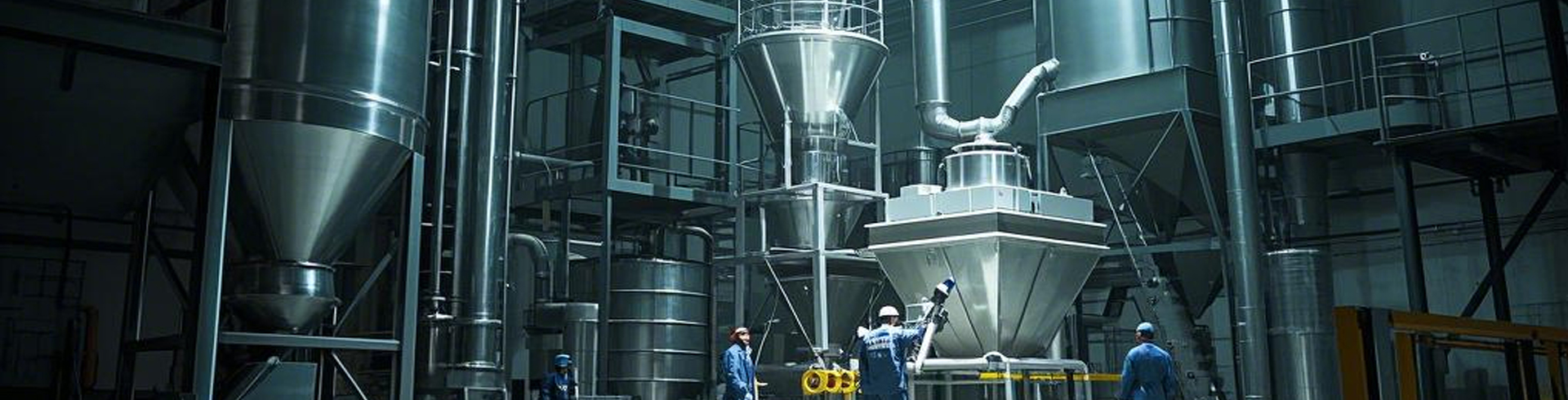
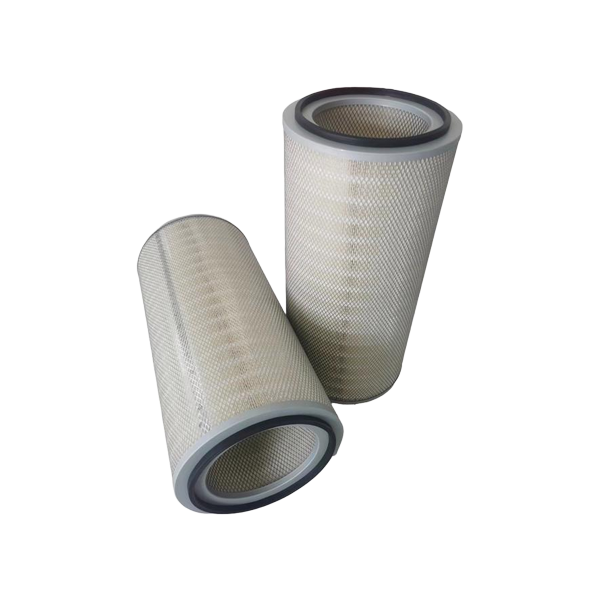
Guanjiang's Dust-Free Feeding Station Filter Element is a critical component designed for dust containment systems during powder transfer operations. Installed within the filtration system of feeding stations, it effectively captures airborne particles generated during material loading — preventing dust escape while maintaining smooth airflow. Utilizing pleated filter media with precision nano-fiber technology, it delivers 99.99% filtration efficiency for particles ≥0.3μm. The compact pleat design maximizes filtration area while maintaining low airflow resistance, ensuring optimal system performance during material discharge and feeding cycles.
Key Advantages
High-efficiency filtration for particles ≥0.3μm. Low initial pressure drop (<150 Pa) maintains system efficiency. Large dust holding capacity extends service intervals.
Anti-static design prevents spark generation in explosive atmospheres. Fire-retardant media meets industry safety standards — suitable for ATEX environments.
Hydrophobic treatment prevents moisture absorption and clogging. Chemical-resistant media suitable for various powder characteristics.
Meets GMP requirements for pharmaceutical applications. Complies with ATEX directives for explosive environments — suitable for OSHA workplace safety standards.
Long service life with regular pulse-jet cleaning. Reduced maintenance frequency and downtime.
Optimized airflow design reduces energy consumption while maintaining high filtration efficiency.
Food-grade materials available for pharmaceutical and food applications — FDA compliant.
Technical Specifications
| Parameter | Specification |
|---|---|
| Filtration EfficiencyNon | 99.99% @ 0.3μm (H13/H14 equivalent)Non |
| Initial Pressure DropNon | < 150 Pa (at rated airflow)Non |
| Media TypeNon | Pleated polyester / PTFE-coated / Nano-fiberNon |
| Filter DimensionsNon | Customizable based on feeding station modelNon |
| Operating TemperatureNon | -20°C ~ 80°C (standard) / Up to 150°C (high-temp version)Non |
| Special FeaturesNon | Anti-static / Hydrophobic / Oleophobic / Fire-retardantNon |
| End Cap MaterialNon | Stainless steel / Carbon steel / Polyurethane / RubberNon |
| ComplianceNon | GMP, ATEX (optional), FDA (food-grade media)Non |
Customization Options:
Media type: Standard polyester / PTFE-coated / Nano-fiber / Cellulose
Special treatments: Hydrophobic (moisture-resistant) / Oleophobic (oil-resistant) / Anti-static (explosion-proof)
End cap configurations: Open / Closed / Gasketed / Special hole patterns
Seal materials: Nitrile / Silicone / Viton / PTFE
Applications
| Industry | Typical Applications |
|---|---|
| PharmaceuticalNon | API transfer, excipient loading, powder containment systemsNon |
| Food ProcessingNon | Ingredient feeding, spice transfer, powder conveyingNon |
| Chemical IndustryNon | Powder transfer, additive feeding, material dispensingNon |
| CosmeticsNon | Powder ingredient handling, pigment transfer operationsNon |
Frequently Asked Questions
Q1: What is the typical lifespan of the filter element?
A: With proper pulse-jet cleaning and normal operating conditions, the filter element typically lasts 6-12 months. Factors affecting lifespan include dust load, particle characteristics, moisture content, and cleaning frequency. Regular maintenance inspections are recommended.
Q2: How does the anti-static feature prevent explosions?
A: The filter media is manufactured with embedded conductive fibers or carbon coating that dissipate static charges. This prevents spark generation that could ignite combustible dust clouds — essential for ATEX-classified environments handling explosive powders (e.g., organic dusts, metal fines).
Q3: Can the filter element be cleaned and reused?
A: Yes. The filter element is designed for pulse-jet cleaning — compressed air bursts blow accumulated dust off the surface. However, wet cleaning or washing is not recommended as it may damage the media. Replace the element when pressure drop remains high after cleaning or visible damage occurs.
Q4: What is the difference between standard and PTFE-coated media?
A: Standard polyester is suitable for dry, non-sticky powders. PTFE-coated media adds a non-stick, hydrophobic surface — ideal for sticky, hygroscopic, or fine powders. PTFE coating also improves chemical resistance and release of dust during pulse cleaning, extending filter life.
Q5: How do I select the correct filter element for my feeding station?
A: Please provide your feeding station model number, current filter dimensions (outer diameter, inner diameter, length), end cap type, and desired media features (anti-static, hydrophobic, PTFE-coated, etc.). We can match or cross-reference with existing OEM part numbers.
Need a replacement filter element for your dust-free feeding station?
Request a Quote → Download Datasheet (PDF)* Please provide your feeding station model, filter dimensions, and any ATEX or GMP requirements for a fast, accurate quotation.