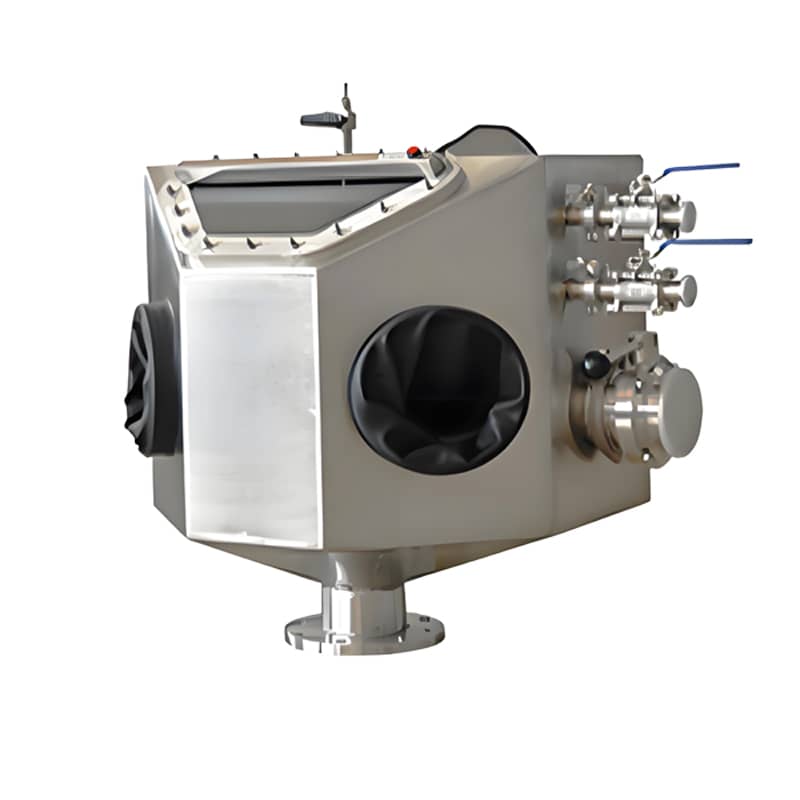
Products Description
How to safely load oxygen-sensitive or moisture-sensitive materials into a reactor?
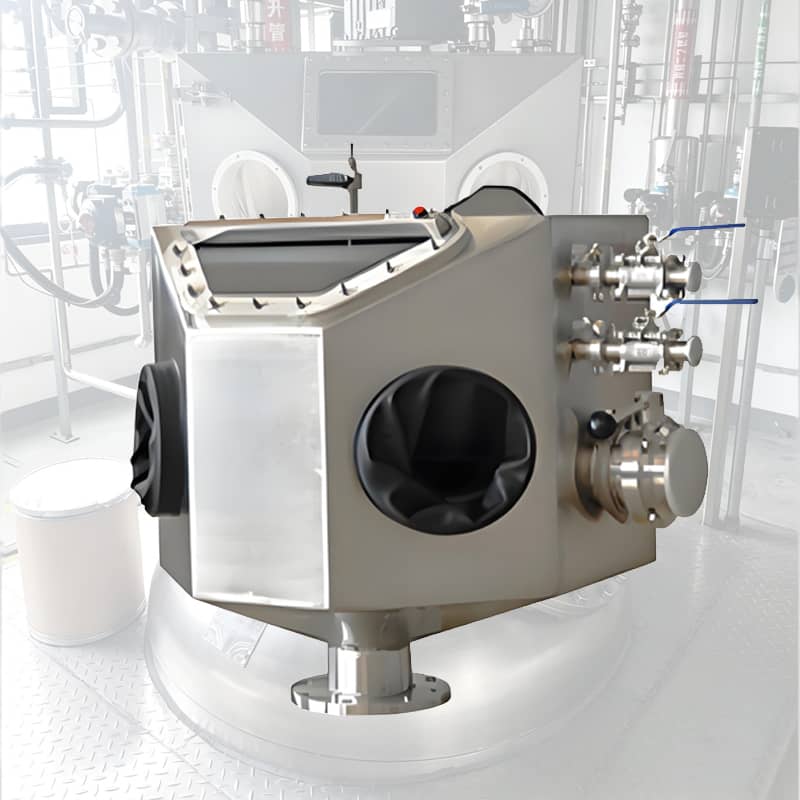
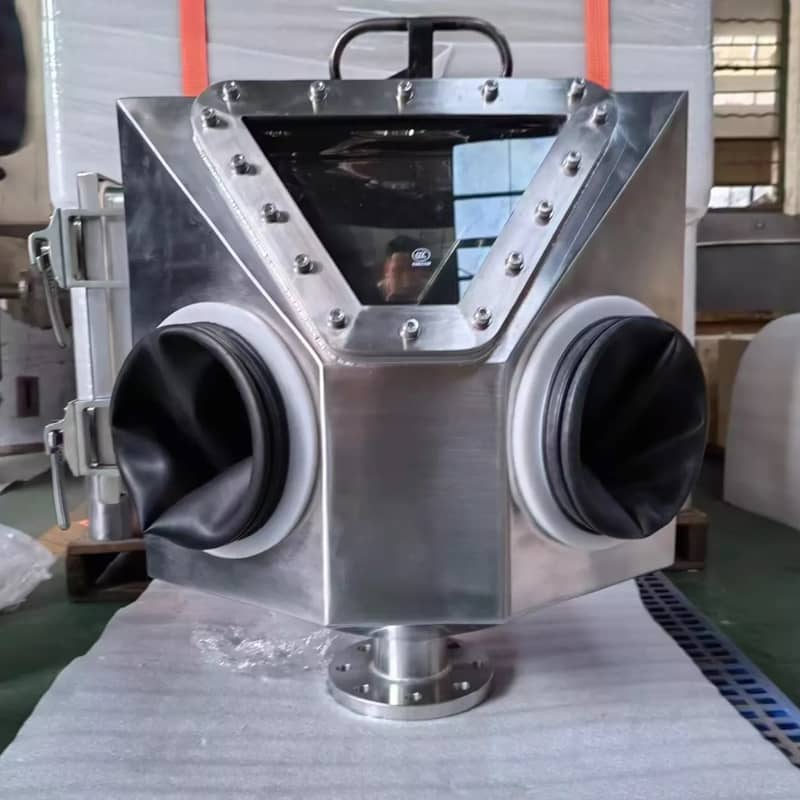
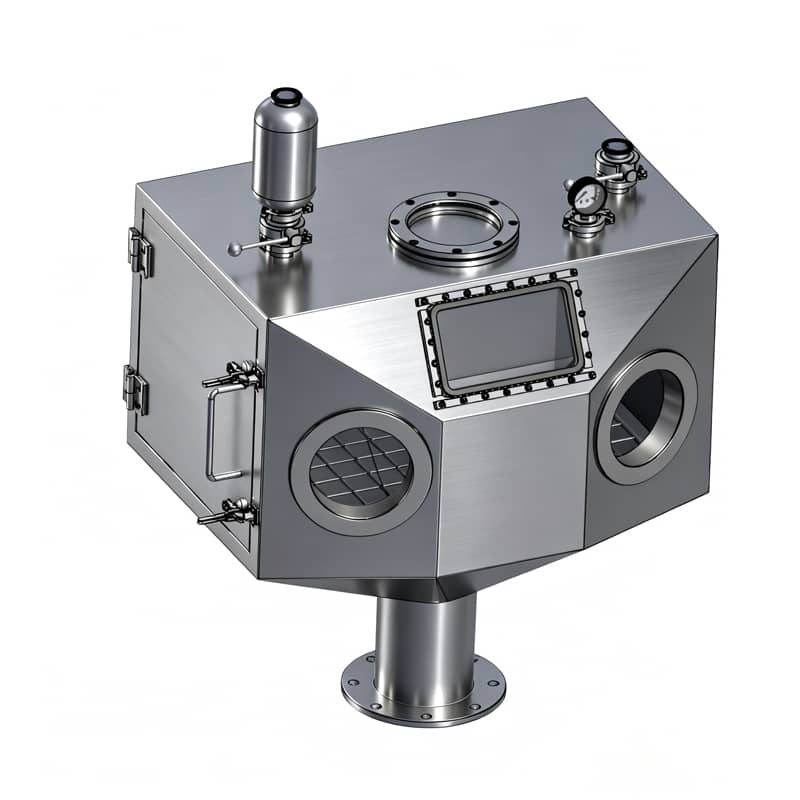
Guanjiang's Reactor Glove Box Feeder creates a fully enclosed, oxygen-free and moisture-free environment for material handling. Constructed from 316L stainless steel with internal electropolished surface (Ra<0.4μm), the unit integrates a viewing window, N₂ purge port, cleaning inlet, and pressure gauge connection. Materials can be opened, weighed, and transferred inside the glove box, then discharged directly into the reactor via the bottom flange — completely isolated from air and humidity.
Key Advantages
Maintains an inert atmosphere via N₂ purge. Prevents oxidation, hydrolysis, and degradation of sensitive materials during reactor charging.
Chamber constructed of 316L stainless steel with internal electropolished surface (Ra<0.4μm). No dead corners, no material residue — ideal for high-purity applications.
Includes viewing window, exhaust port, cleaning inlet, pressure gauge port on top, plus N₂ purge port and bag discharge port on the side — all sanitary quick-connect fittings.
Bottom discharge flange (DN100 PN16) connects directly to reactor inlet. Materials fall by gravity through a valve — zero exposure to atmosphere.
Technical Specifications (Standard Model)
| Parameter | Specification |
|---|---|
| Chamber Dimensions | 800×600×600 mm (custom sizes available) |
| Front Panel Material | Transparent acrylic (clear visibility) |
| Chamber Material | 316L Stainless Steel |
| Internal Surface Finish | Electropolished to Ra<0.4μm, no dead corners |
| Glove Ports | Anti-disconnect locking device |
| Left Door Opening | 500×470 mm (quick-open) |
| Bottom Discharge Port | DN100 PN16 flange |
| Top Ports | φ100 viewing window, DN40 exhaust, cleaning inlet, DN20 pressure gauge port, lifting hooks |
| Right Side Ports | DN40 N₂ purge (top), DN200 PN10 bag discharge port (bottom) |
Customization Available:
The standard model can be fully customized based on your reactor specifications, available space, and process requirements — including chamber size, port types/positions, number of glove ports, and additional features. Contact us with your requirements for a detailed proposal.
Frequently Asked Questions
Q1: How is the oxygen-free / moisture-free environment achieved?
A: Connect high-purity nitrogen (or argon) to the DN40 N₂ purge port. Before operation, close all valves and purge the chamber while opening the exhaust port. After 2-3 replacement cycles, oxygen and moisture levels drop to near zero. An optional online oxygen analyzer can be added for monitoring.
Q2: How do you clean the glove box feeder?
A: The top-mounted cleaning inlet (sanitary quick-connect fitting) allows connection to a CIP line for spray cleaning. The internal surface is electropolished to Ra<0.4μm, preventing material adhesion. For sterile applications, steam-in-place (SIP) can also be accommodated.
Q3: How does the feeder connect to the reactor and transfer materials?
A: The bottom DN100 PN16 flange bolts directly to the reactor inlet flange. A butterfly valve or ball valve is installed between them. Operation steps: (1) Load material through left door, (2) Close door and purge, (3) Open bottom valve to discharge material by gravity into reactor, (4) Close valve — fully enclosed transfer with no exposure.
Q4: Can the operation inside the glove box be observed clearly?
A: Yes. The front panel is transparent acrylic, and the top includes a φ100 viewing window. Operators can clearly see the material status and handling process. The glove ports feature anti-disconnect locking devices for safety.
Need a glove box feeder for your sensitive reactor charging process?
Request a Quote → Download Datasheet (PDF)* Please provide your reactor flange size, material characteristics (oxidation/moisture sensitivity), and chamber size requirements for a custom solution.